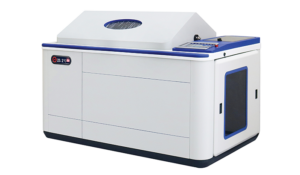
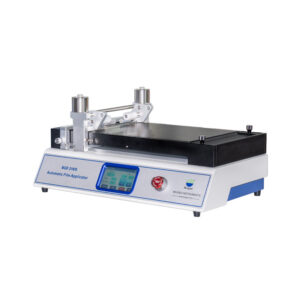
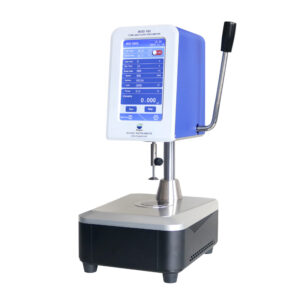
Weathering studies are easier to interpret when the specimen plan reflects the material, service environment, and failure question. A clear matrix helps compare coatings, plastics, and automotive interior materials without treating unlike results as equivalent. Before using a xenon test chamber, define what each specimen should reveal and how findings will guide decisions.
Start With the Material and Failure Question
Different materials respond to light, heat, and moisture in different ways. Coatings may show color change, gloss loss, cracking, or blistering. Plastics may fade, become brittle, or develop surface changes. List each material family and its evaluation criteria in the matrix. This keeps the study focused on observable outcomes.
Record the intended service environment before selecting an exposure cycle. Automotive interior trim may receive sunlight through glass, while exterior coatings may face direct sunlight and repeated wetting. These conditions are not interchangeable. Document the application, specimen type, expected exposure, and evaluation method so reviewers understand why each condition was chosen.
Include a reference material or established formulation when comparison is required. Test new formulations beside the reference under the same cycle and inspection schedule. If several material families share a run, interpret each family separately. A coating’s color shift and a plastic’s change in mechanical performance describe different responses, even under the same exposure.
Set the Matrix and Mount Specimens Consistently
Separate material variables from exposure variables. Material fields may include substrate, coating system, color, thickness, surface preparation, and curing conditions. Exposure fields should record filter type, irradiance target, temperature settings, moisture or spray cycle, and duration. Define the relevant fields before testing starts.
Plan replicate specimens for key materials and conditions. Replicates show whether a result reflects a consistent response or an isolated specimen issue. Reserve enough samples for inspections and final measurements. Set replicate numbers according to the method, project risk, and sample area rather than using one fixed number.
Record specimen dimensions, exposed area, backing, edge treatment, and preparation date. Mount samples according to the equipment instructions and selected method. Keep the exposed face correctly oriented, and avoid contact that could shade surfaces or transfer material. For different sample sizes, document positions and confirm the layout suits the required geometry.
Control Exposure and Monitor Irradiance
For xenon arc testing with daylight filters, a commonly used irradiance level is 0.51 W/(m²·nm). When selecting a xenon test chamber, state the measurement wavelength, target value, control method, and monitoring record. Reporting irradiance without wavelength and units can make comparisons unclear between laboratories or reports.
Light intensity is only one part of the exposure. Temperature, moisture, spray, filter selection, and duration also affect material response. Record programmed settings and run history, including interruptions or deviations. For spray exposure, document the cycle and water requirements specified by the method.
Calibration and monitoring records support traceability. Record the sensor used, calibration status, check dates, and corrective action after deviations. Follow the equipment manual and applicable standard for irradiance control and sensor placement. For a xenon weathering chamber, review data logs alongside specimen observations, not just programmed setpoints.
Apply Standards and Assess High-Irradiance Testing
ISO 16474-2 addresses xenon-arc exposure of paints and varnishes, while ISO 4892-2 covers exposure methods for plastics. Select the standard that matches the material and study purpose. The matrix should identify the method and edition used, along with selected options, rather than combining conditions from separate procedures without justification.
For daylight-filter exposure, 0.51 W/(m²·nm) is a commonly used irradiance level. High-irradiance xenon arc equipment can deliver around three to four times that level. This may shorten screening for selected materials, but irradiance does not convert directly to service-life hours. Suitability depends on the material and study question.
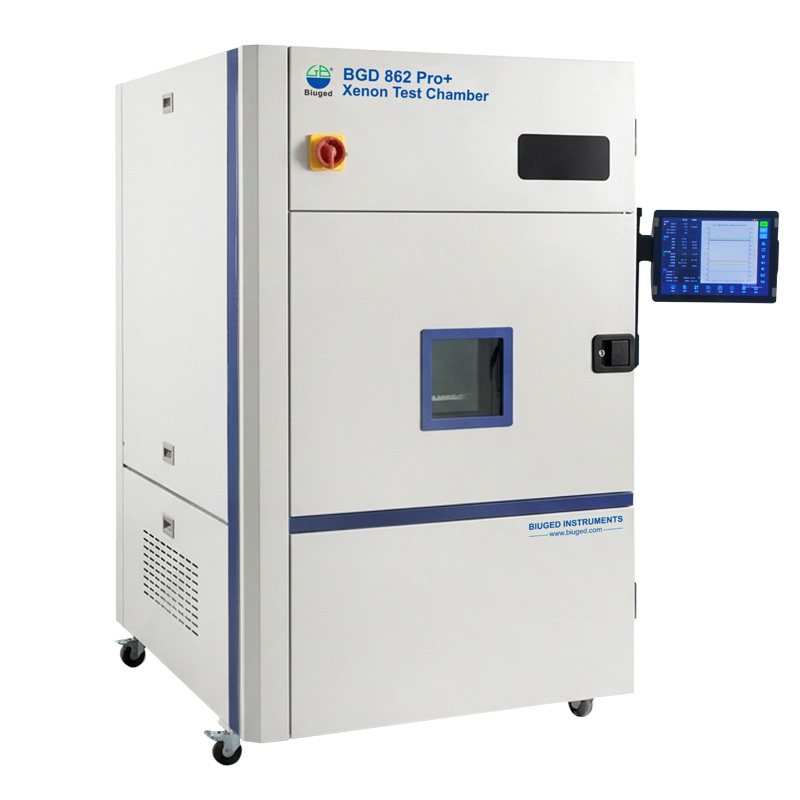
Our High-irradiance Xenon Test Chamber supports evaluation of coatings and polymers during formulation development, product finalization, and quality control. At BIUGED INSTRUMENTS, we recommend defining irradiance, temperature, moisture cycle, and evaluation points before testing. Accelerated exposure can support automotive interior comparisons, but conclusions must remain tied to tested conditions.
Interpret Results and Record Decisions
Set inspection intervals and evaluation criteria before exposure begins. Depending on the material, teams may measure color, gloss, cracking, surface appearance, or a relevant mechanical property. Use the same method and measurement conditions at each interval so changes can be compared over time.
Review unexpected results before repeating a full study. Check preparation records, mounting positions, exposure logs, calibration status, and evaluation methods. If a deviation occurred, document its possible influence rather than silently excluding the result. This review can help separate a material issue from a test setup problem and guide a focused follow-up.
For multi-material programmes, keep each material family’s interpretation distinct, even when specimens share chamber time. BIUGED INSTRUMENTS encourages a documented approach to professional testing across coatings, inks, and related materials. A clear plan helps teams compare samples, communicate limitations, and select the next test based on recorded evidence.
Keep the Study Fit for Purpose
Reliable weathering studies begin with a clear question, comparable specimens, controlled exposure, and traceable records. Standards define the framework, while careful mounting and irradiance monitoring improve comparisons. When a xenon weathering chamber is used for multiple materials, the matrix should preserve each material’s evaluation needs rather than force every result onto one scale. This supports practical screening and defensible quality decisions.