Materials exposed to sunlight, heat, and moisture can fade, crack, discolor, or lose mechanical properties. Accelerated weathering tests help manufacturers evaluate these changes under controlled laboratory conditions.
Xenon arc chambers and UV testing machines are two common options, but they do not reproduce the same exposure conditions. The right choice depends on the material, intended environment, and test standard—not simply on which chamber has more features.
What Are the Differences Between Xenon Arc and UV Weathering Tests?
Xenon arc testing reproduces a broad portion of sunlight, while fluorescent UV testing concentrates on ultraviolet radiation. Their light sources and exposure conditions make them suitable for different evaluation objectives.
Xenon Arc Testing: Broad-Spectrum Solar Simulation
A xenon weathering chamber uses a xenon arc lamp and optical filters to simulate selected sunlight conditions, including outdoor exposure or sunlight passing through window glass. Tests can combine irradiation with controlled temperature, humidity, and water spray. Typical applications include automotive exterior parts, architectural coatings, and outdoor plastics.
UV Weathering Testing: Focused Ultraviolet Exposure
A UV test chamber uses fluorescent lamps such as UVA-340 or UVB-313. UVA-340 simulates the short-wavelength UV portion of sunlight; UVB-313 provides more intense shortwave radiation and may cause damage that is less representative of natural outdoor exposure. UV testing is used for coatings, plastics, and other non-metallic materials.
| Feature | Xenon Arc | Fluorescent UV |
| Light source | Xenon arc lamp | Fluorescent UV lamps |
| Spectrum | Broad solar spectrum | Selected UV wavelengths |
| Exposure factors | Light, heat, moisture | UV, heat, condensation or spray |
| Main focus | Broader solar weathering | UV-related degradation |
How Do Xenon and UV Test Chambers Differ in Performance?
Chamber performance depends on light-source configuration, environmental control, irradiance monitoring, and specimen exposure uniformity.
Light Sources and Optical Filters
In a xenon test chamber, filters adjust the lamp spectrum to match the required exposure condition. UV chambers use lamps with specified wavelength characteristics. The selected lamp and filter must match the test method; lamp wattage alone is not a reliable basis for comparison.
Temperature, Humidity, and Water Spray Control
A xenon aging test chamber can combine light with controlled temperature, humidity, and water spray. UV chambers commonly use condensation or spray to introduce moisture, but independent relative-humidity control is not available on every model. Confirm the required functions against the test cycle.
Irradiance Monitoring and Exposure Uniformity
Irradiance is radiant power received per unit area. Check whether the chamber monitors the wavelength specified by the method, adjusts lamp output, exposes specimens uniformly, and records test conditions. Calibration and consistent specimen preparation remain necessary for reproducible results.
- Irradiance monitoring at the required wavelength.
- Automatic control or compensation for lamp-output changes.
- Uniform exposure across the specimen rack.
- Recording and exporting test parameters.
Which Weathering Test Method Is Suitable for Your Material?
Choose the method according to the material’s service environment and the degradation being evaluated. Similar materials may require different procedures for different end uses.
Paints, Coatings, and Printing Inks
A xenon lamp weathering test chamber is useful when broader solar exposure, including visible light and moisture effects, is relevant. Fluorescent UV testing is appropriate when the specified method focuses on UV-induced coating degradation. For inks, also consider the substrate and the appearance properties being assessed, such as color or gloss.
Automotive Interior and Exterior Components
Exterior coatings and trim are exposed to sunlight, heat, and moisture. Interior components may receive sunlight filtered through glazing, a condition a xenon weathering chamber can reproduce with the appropriate filters. Suppliers should follow the vehicle maker’s material specification or the applicable automotive procedure rather than substituting a generic weathering cycle.
| Material or component | Testing consideration |
| Exterior paint and trim | Solar exposure and moisture; check the specified xenon or UV method |
| Dashboard and interior trim | Filtered sunlight and interior heat |
| Plastic housings | Material-specific exposure and evaluation criteria |
Plastics, Textiles, Rubber, and Adhesives
For plastics, the choice may be between UV-focused degradation and broader solar exposure. Textile testing often evaluates color change; rubber testing may assess cracking or discoloration. Adhesive testing should account for the formulation, substrate, bond application, and required exposure procedure. Do not select a method by material category alone.
How Do You Select a Weathering Test Chamber Based on Testing Standards?
Identify the required standard and edition before comparing equipment. The standard determines the exposure source and procedure; chamber capability must then be checked against the specified cycle.
ISO Standards for Xenon and UV Exposure
| Standard | Material scope | Exposure source |
| ISO 16474-2:2013 | Paints and varnishes | Xenon arc |
| ISO 16474-3:2021 | Paints and varnishes | Fluorescent UV |
| ISO 4892-2:2013 | Plastics | Xenon arc |
| ISO 4892-3:2024 | Plastics | Fluorescent UV |
These standards cover different exposure methods and are not interchangeable. Confirm the edition required by the customer or laboratory specification.
ASTM Standards for Material Weathering Tests
ASTM G155 covers operation of xenon arc apparatus, while ASTM G154 covers fluorescent UV apparatus. ASTM D4587 addresses fluorescent UV-condensation exposure of paints and related coatings; ASTM D6695 addresses xenon arc exposure of paints and related coatings. G154 and G155 describe apparatus operation and do not, by themselves, define the best cycle for every material.
SAE Standards for Automotive Material Testing
Automotive suppliers may encounter SAE J2412 for controlled-irradiance xenon exposure of interior trim and SAE J2527 for exterior materials. Verify the current edition and any vehicle-maker-specific requirements before specifying a chamber.
Equipment Parameters and Test Reproducibility
Compare the required lamp and filters, irradiance wavelength, temperature and humidity ranges, water exposure, specimen capacity, and data-recording functions. Also consider calibration, maintenance, specimen preparation, and result evaluation. A xenon test chamber should support the actual test cycle; a model name alone does not establish compliance.
- Confirm the exact standard, edition, and exposure cycle.
- Match lamp, filter, irradiance, and moisture settings.
- Check specimen dimensions and exposure capacity.
- Review calibration, data export, and service requirements.
Which Weathering Test Equipment Does BIUGED INSTRUMENTS Offer?
BIUGED INSTRUMENTS offers xenon arc and fluorescent UV weathering equipment for laboratories testing coatings, plastics, and other materials. Select the model by matching its documented configuration to the required procedure.
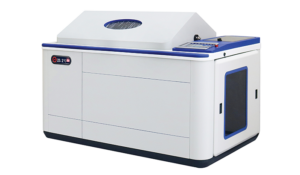
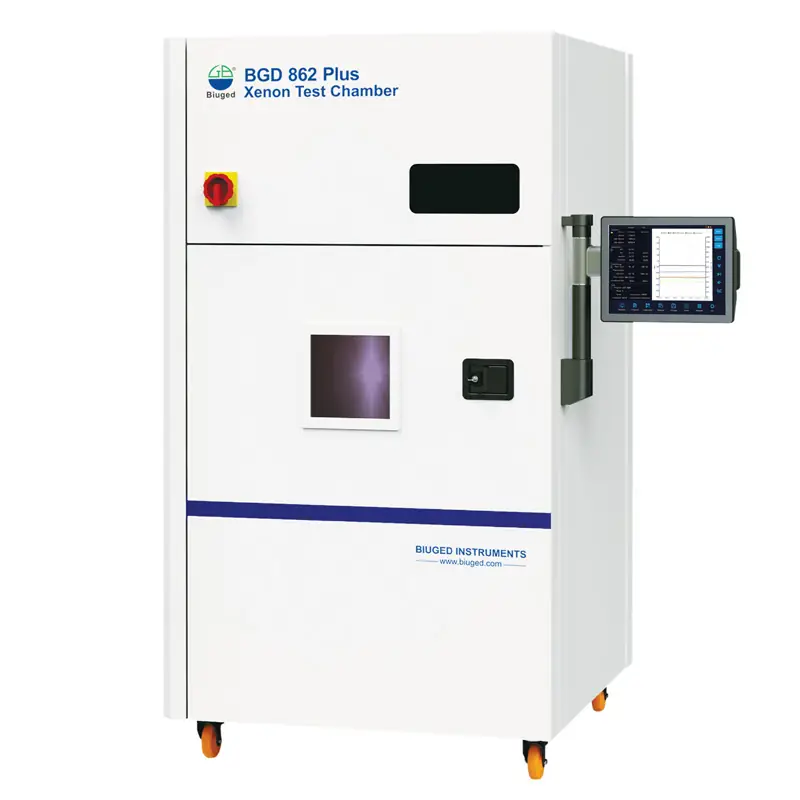
BGD 862 Plus Big Xenon Test Chamber
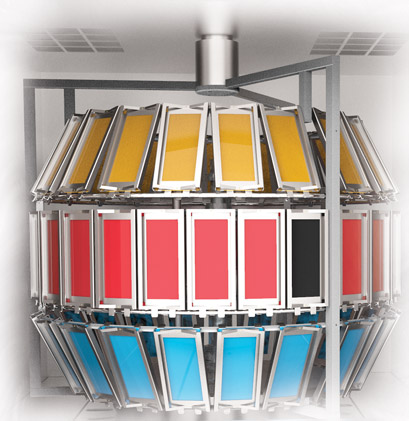
The BGD 862 Plus is a xenon aging test chamber designed for weathering and lightfastness testing. It is equipped with a 6.5 kW water-cooled xenon lamp, a 6,500 cm² exposure area and a three-tier rotating specimen rack. Irradiance monitoring is available at 340 nm, 420 nm, 300–400 nm, and 300–800 nm. The system also provides temperature, humidity, and water-spray control, plus test-data management functions.
Its larger exposure area may suit laboratories processing more specimens in a test run. Confirm the required specimen arrangement and standard-specific settings with BIUGED before ordering.
BGD 852 Bench UV Light Accelerated Aging Test Chamber
The BGD 852 UV test chamber uses three 20 W fluorescent lamps, with UVA-340 or UVB-313 options. It accommodates 18 standard specimens measuring 150 × 70 mm. The listed working temperature range is RT+5°C to 60°C. Operators can set test duration, temperature, spray time, and spray intervals through the touchscreen interface.
This bench configuration is intended for laboratories requiring fluorescent UV exposure. Check that the selected lamp and chamber functions match the applicable test method.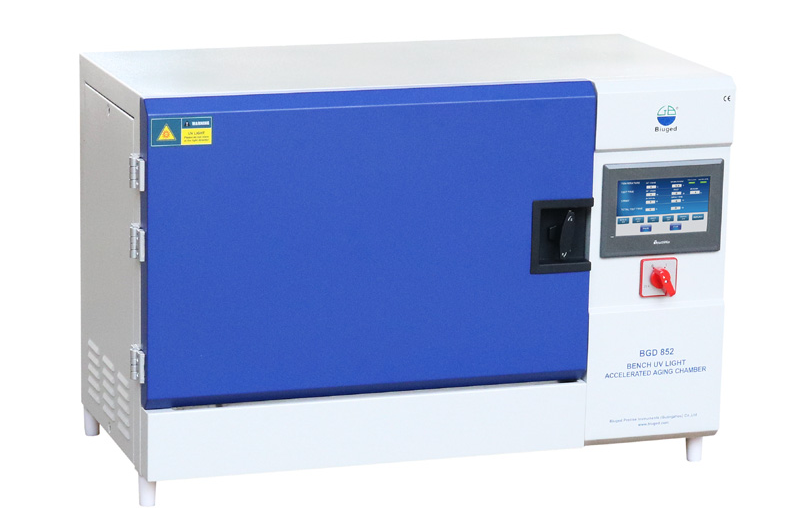
Conclusion
Xenon arc testing provides broader solar simulation, while fluorescent UV testing focuses on ultraviolet exposure. Neither method is automatically the better choice: material, service environment, and the required standard determine the appropriate procedure.
Before purchasing a UV testing machine or a xenon chamber, confirm the standard edition, exposure cycle, lamp and filter configuration, environmental controls, specimen capacity, and data requirements. BIUGED’s BGD 862 Plus and BGD 852 provide options for different xenon and UV testing needs.