Viscosity results help coating and ink laboratories decide whether a batch meets its release requirements. A sampling plan for rotational viscometers does more than record one reading. It defines sample origin, conditioning, instrument setup, and result review. Consistent procedures make batch comparisons meaningful and help teams investigate variation before release.
Release Goals Shape the Sampling Plan
First, define what the test must confirm. A release check may compare a batch with an approved specification, check consistency between containers, or investigate a process change. This purpose determines sample quantity, method, and number of readings. Record product code, batch number, sampling point, date, and operator so each result stays linked to the material tested.
Coatings and inks can vary within a batch, especially when pigments or fillers settle during storage. Take samples according to an agreed procedure, not simply from the easiest container to reach. For large vessels, note whether the sample comes from the upper, central, lower, or a mixed portion. Follow safe handling instructions and avoid air bubbles or contamination.
Representative Samples Need Consistent Handling
Use clean, compatible containers and close them promptly to limit solvent loss, skin formation, or contamination. If stirring is required, define the mixing method and duration. Excessive mixing can introduce bubbles or alter the sample’s structure; insufficient mixing may leave pigments unevenly distributed. Keep preparation consistent across operators and shifts.
Set a defined resting time after mixing. Some materials recover their structure gradually, so immediate readings may differ from readings taken after a fixed rest. When a result looks unusual, retain a second sample where practical. Check sampling, mixing, and handling, then repeat the test according to the laboratory procedure rather than changing steps informally.
Instrument Setup Depends on the Material
Choose an instrument and measurement geometry suited to the expected viscosity range and material behavior. Results outside the instrument’s working range may be unstable or hard to compare. Review method limits before testing and document the setup. Rotational viscometers are commonly used for coating and ink checks under defined measurement conditions.
Spindle choice and speed also affect readings. Many paints and inks are non-Newtonian, meaning their apparent viscosity can change with shear conditions. Select a spindle suited to the expected range and follow the method’s speed requirement. Record spindle identification, speed, and measured value together. A spindle viscometer supports routine checks when its configuration matches the specified method.
Temperature Consistency Matters
Temperature changes can affect viscosity, so samples should reach the defined test temperature before measurement. Record target and actual sample temperatures when required. Avoid comparing a warm production sample with a cooler laboratory sample unless the procedure accounts for the difference. Stable conditions help separate batch variation from conditioning effects.
Room temperature may not reflect a sample’s condition after transport or storage in hot or cold areas. Use controlled storage or another conditioning method when required, and keep the time before measurement consistent. If temperature drifts during testing, follow laboratory rules for reconditioning and repeating the reading.
Application Shear Shapes Test Selection
Routine release readings may not describe every application stage. Coatings experience relatively low shear during storage, transport, levelling, and sagging. Pumping, dipping, and low-speed mixing involve medium shear. High-speed dispersion, rolling, spraying, and brushing create higher shear, so the test plan should match the question being investigated.
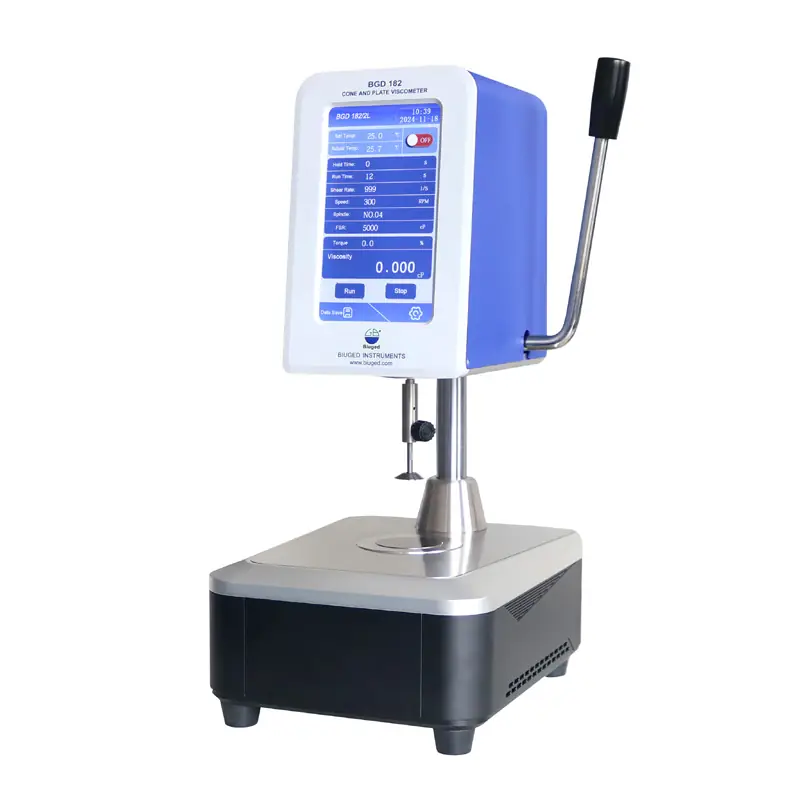
For high-shear evaluation, a cone-and-plate method may suit the sample and required method. For high-speed dispersion, rolling, spraying, and brushing, shear rates are generally 9,000 to 12,000 s⁻¹. This test can characterize behavior in that range, but should not replace routine release testing unless the specification calls for it.
Our BIUGED INSTRUMENTS range includes the BGD 182 Cone-and-plate Viscometer. Its special angled conical spindle is driven at high speed by a stepper motor to generate a high shear rate in the sample. The instrument conforms to ISO 2884-1, covering cone-and-plate rotary viscometers operated at a high shear rate. Use this method when the test objective and specification require high-shear data.
Reviewing Results Before Batch Release
Set acceptance limits before testing. Compare readings with the approved specification. If a value falls outside the expected range, review repeatability, temperature, spindle, speed, and sample preparation. A second measurement may identify procedural variation, but repeat testing should follow a documented rule rather than continue until a passing value appears.
The release record should include batch identifier, sample location, preparation steps, instrument identification, spindle, speed, temperature, readings, and decision. Keep the method or standard reference with the record. These details help quality teams trace batch differences and discuss them with production staff, researchers, suppliers, or customers. The recorded result is useful when its test conditions are clear.
Repeatable Procedures Support Clear Decisions
A sampling plan works when different operators can follow it and obtain comparable results. Use a concise checklist, train staff in sample handling, and review the procedure after changes to formulation, instrument, or production process. Periodic checks of instrument condition and calibration status also support confidence in the data.
For coating and ink families with different preparation, resting times, ranges, or shear conditions, maintain separate instructions. A spindle viscometer can support routine quality checks when the method is suitable and consistently applied. With defined sampling, controlled temperature, recorded settings, and clear acceptance rules, we can make release decisions more traceable. At BIUGED INSTRUMENTS, we develop testing equipment for coating and ink laboratories with practical workflows.