
Material testing laboratories often start with standard instruments because they can meet common testing requirements. However, as applications become more specialized, laboratories may face situations where regular equipment cannot fully match their testing process. Different sample sizes, environmental conditions, automation needs, and data management methods may require a more flexible approach.
A suitable testing plan should consider the complete workflow, from sample preparation to final evaluation. By understanding actual laboratory requirements, engineers and users can develop practical methods that improve testing consistency and efficiency.
Identifying When Standard Equipment Needs Adjustment
Standard testing instruments are designed for common applications, but some industries have unique testing conditions. For example, coating manufacturers may work with different substrates, while automotive companies may need specific evaluation methods for new materials.
Before choosing a customized system, laboratories should review their testing goals. Sample dimensions, testing standards, operation steps, and expected data output are important factors. A clear understanding of these requirements helps engineers define suitable equipment functions.
In some cases, a custom testing equipment approach can help laboratories handle special fixtures, automation requirements, or specific testing environments. The purpose is not simply to change equipment design but to create a workflow that matches practical laboratory needs.
Evaluating Fixtures, Automation, and Environmental Conditions
Custom fixtures are often considered when standard holders cannot support certain samples. Large panels, flexible materials, or unusual shapes may require special structures to maintain stable testing conditions.
Automation is another factor that can influence equipment selection. When laboratories perform repeated tests, manual operation may create differences between operators. Automated processes can help maintain consistent procedures and reduce unnecessary variation during daily work.
Environmental control is also important for material testing. Temperature, humidity, airflow, and other conditions may influence coating performance or material behavior. Laboratories need to evaluate whether additional environmental functions are necessary for their specific testing applications.
Building Solutions Through Engineer Collaboration
Developing a customized system requires communication between equipment engineers and laboratory users. Engineers need to understand how samples are prepared, how tests are performed, and what results users need to record.
Laboratory teams can provide practical information about daily challenges. For example, they may need faster preparation methods, improved repeatability, or easier data tracking. These details help define the design direction before equipment development begins.
At the same time, engineers can provide suggestions based on testing experience. A well-planned solution should balance technical requirements with actual operation conditions instead of adding unnecessary functions.
Improving Coating Application with Automated Systems
Coating laboratories often require consistent application methods before evaluating material performance. Differences in spray process, film thickness, and operator handling may influence test results. A controlled application process helps create more comparable test panels.
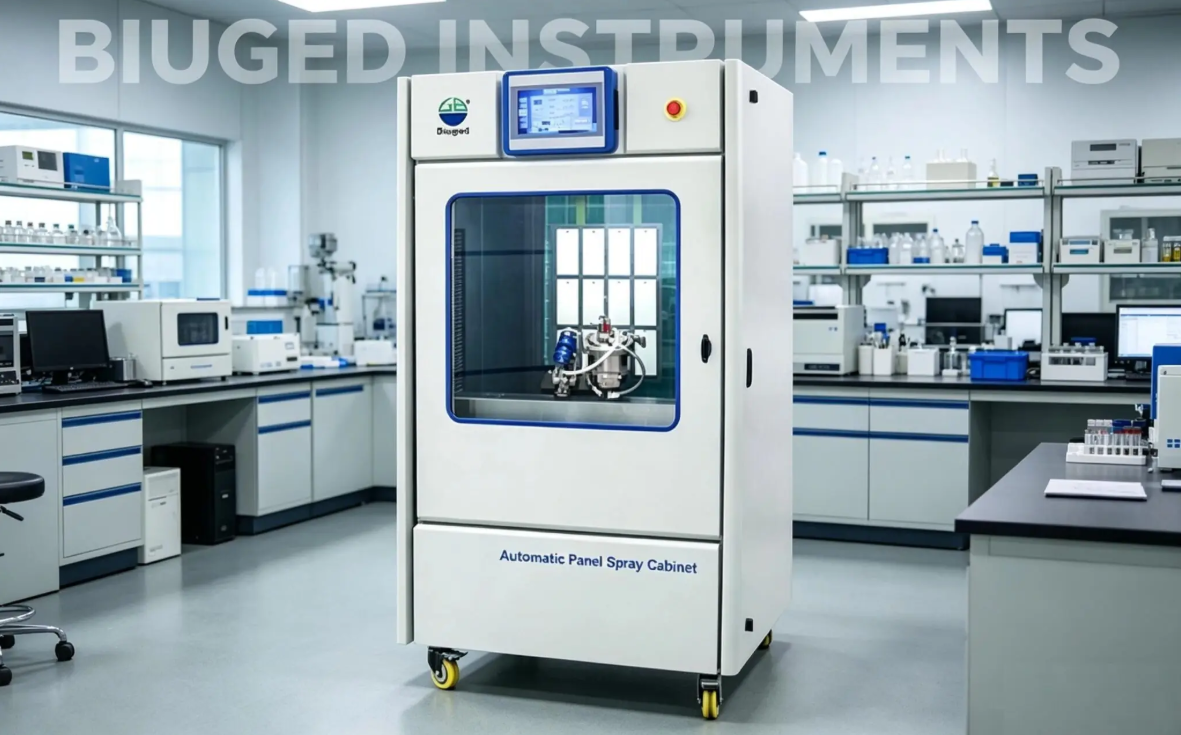
Our BGD 227-V Automatic Panel Spray Cabinet is designed for standardized and repeatable coating application on test panels. It includes programmable spray parameters, precise flow control, and a closed-loop environment to support consistent film thickness and quality during coating preparation.
For laboratories looking for material testing solutions, automated application equipment can become part of a wider testing workflow. It can support paint, coating, and related material evaluation by helping users manage preparation steps more systematically.
Connecting Testing Equipment with Data Workflows
Modern laboratories increasingly focus on data management as well as testing accuracy. Test records, operating conditions, and sample information need to be organized clearly for future review and comparison.
A customized testing system may include functions that support data collection and workflow management. This can help laboratories connect equipment operation with internal quality control processes.
When planning a system, users should consider how information moves through the laboratory. From sample preparation to final reports, a suitable workflow can help teams improve communication and maintain organized testing records.
Considering Long-Term Laboratory Requirements
A customized solution should be based on current needs and future development plans. Laboratories may expand product categories, introduce new standards, or increase testing volume over time.
Before selecting equipment, users can review several aspects, including maintenance requirements, training needs, calibration support, and possible upgrades. These factors influence the long-term value of the investment.
We focus on understanding customer testing processes before developing equipment solutions. Our experience in coating and material testing allows us to communicate with laboratory teams about practical requirements and application conditions.
BIUGED INSTRUMENTS provides precision testing instruments and customized approaches for coating, ink, and material evaluation applications. We work with users to understand testing challenges and develop equipment configurations that fit different laboratory environments.
Creating Practical Testing Plans for Future Applications
Custom equipment is not required for every laboratory. Standard instruments can meet many common testing tasks. However, when testing requirements involve special fixtures, automation, environmental control, or complex data workflows, a tailored approach may provide better compatibility.
Planning starts with understanding the relationship between materials, testing methods, and laboratory operations. Clear communication between users and engineers helps create solutions that are practical and easier to apply.
With experience in precision testing technology, BIUGED INSTRUMENTS continues to support laboratories in developing reliable testing processes. By combining technical knowledge with customer requirements, we help users build testing systems that match their application goals.
