
Corrosion evaluation is important for industries that require durable materials and protective coatings. Automotive parts, metal components, and industrial products may face changing environments during service. Laboratory testing helps companies study how materials respond to salt, moisture, temperature changes, and repeated exposure cycles.
Traditional salt spray methods provide useful information, but they may not fully represent outdoor conditions with changing wet and dry periods. A cyclic corrosion test chamber helps laboratories create more practical exposure programs by combining different environmental phases and supporting more detailed material evaluation.
Understanding the Purpose of Cyclic Corrosion Programs
Cyclic corrosion testing is designed to simulate complex outdoor corrosion conditions through controlled laboratory cycles. Instead of using one continuous exposure stage, the process may include salt spray, humidity, drying, and other environmental changes.
For automotive manufacturers and component suppliers, corrosion testing supports reliability evaluation. Parts such as metal structures, coated components, and exterior materials need testing methods that match their expected service environments.
A suitable testing program begins with clear objectives. Teams need to define the material type, coating system, expected application, and related standards before starting the evaluation process.
Planning Test Phases and Recording Results
Documentation is an important part of corrosion testing. Laboratories usually record exposure cycles, temperature conditions, humidity levels, solution information, and inspection results. These records help engineers compare different materials under similar conditions.
When selecting equipment, users should consider whether the system can support required test phases. A flexible cct chamber allows laboratories to organize different exposure stages according to project requirements and testing standards.
The comparison process should also include sample mounting methods, chamber capacity, control accuracy, and maintenance needs. These factors influence daily operation and long-term testing management.
Evaluating Equipment for Automotive Applications
Automotive industries have strict requirements for corrosion evaluation because vehicle components may experience rain, humidity, road salt, and temperature changes. Testing methods need to provide useful information for material selection and coating improvement.
For suppliers developing automotive components, a cyclic corrosion test chamber provides a controlled environment for studying corrosion behavior. It can support evaluation processes for coatings, metal parts, and related materials used in vehicle applications.
Different projects may require different test conditions. Engineers should compare equipment functions based on standards, sample types, and expected usage scenarios instead of focusing only on individual features.
Considering Equipment Design and Operation
Equipment design affects the consistency of laboratory work. Stable environmental control, clear operation procedures, and convenient maintenance can help technicians manage repeated testing tasks more efficiently.
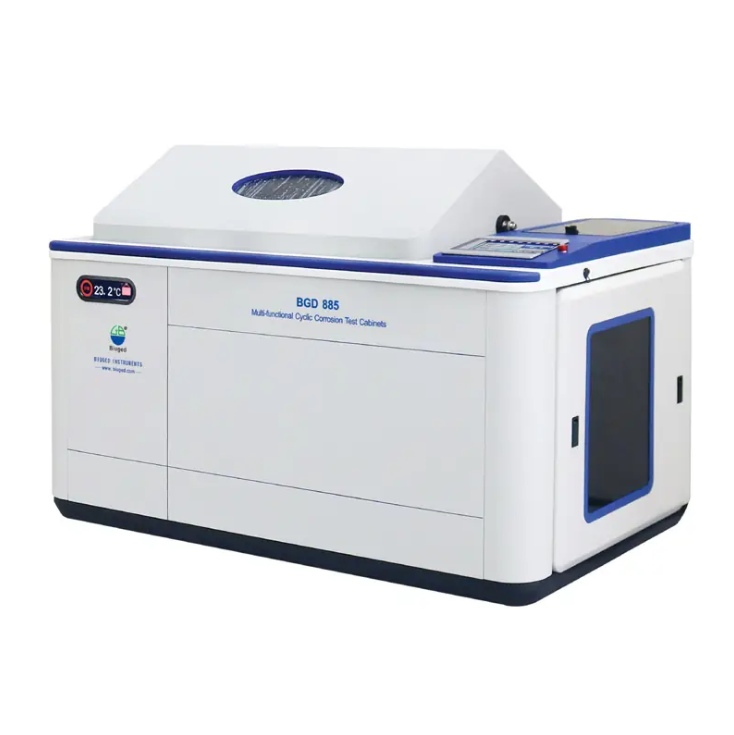
Our multi-functional cyclic corrosion test cabinets are developed for laboratory corrosion evaluation needs. The system is designed to support complex corrosion programs that combine different environmental stages. During operation, solution monitoring, environmental parameter control, and test-cycle management help users maintain stable testing conditions throughout the evaluation process. This approach helps users move beyond simple continuous salt spray testing methods.
In practical applications, BIUGED INSTRUMENTS focuses on precision testing solutions for coatings, materials, and related industries. With our own R&D and manufacturing capabilities, we design and produce corrosion testing equipment based on different laboratory requirements. We also provide customized solutions and OEM cooperation according to users’ validation requirements, including test standards, sample conditions, exposure programs, and workflow needs. This allows customers to select equipment configurations that better match their evaluation objectives.
Comparing Solutions for Reliable Material Assessment
Before purchasing equipment, companies should review several factors, including testing standards, sample quantity, operation requirements, and service support. A suitable system should match the laboratory workflow and future testing plans. Suppliers should also understand users’ validation requirements, including target materials, acceptance criteria, testing cycles, and reporting methods, before recommending suitable equipment solutions.
A professional cct chamber can help testing teams manage repeated corrosion cycles while maintaining organized procedures. Clear parameter settings and complete documentation allow engineers to review results with better reference value.
For third-party laboratories and manufacturing companies, equipment selection also involves long-term considerations. Calibration support, technical communication, and maintenance services can influence the overall testing experience.
Reviewing Standards Before Testing
Standards provide guidance for designing corrosion programs and comparing results. Different industries may follow specific methods based on product requirements, environmental conditions, and evaluation goals. Engineers should confirm the suitable standard before preparing samples and setting test cycles.
During project planning, teams can review exposure duration, inspection intervals, and evaluation methods together. This helps create a testing process that matches the purpose of the study and avoids unclear comparisons between samples.
For coating developers, corrosion testing data can support formulation adjustments and quality decisions. For automotive suppliers, the results can provide references for improving component protection and material selection.
A clear testing plan connects laboratory work with practical application needs. It also helps teams maintain consistent communication between research, production, and quality departments during product development.
Building Better Corrosion Testing Workflows
Corrosion evaluation is not only about exposing samples to a corrosive environment. It involves planning, controlling, recording, and analyzing each stage of the test process. A structured workflow helps companies understand material performance more clearly.
With experience in coating and material testing, BIUGED INSTRUMENTS provides laboratory solutions that support corrosion research and quality evaluation. We pay attention to practical testing needs and help users develop procedures that fit different application areas.
Selecting suitable equipment requires a balance between testing objectives, standards, and operational conditions. Through proper planning, cyclic corrosion studies can provide useful information for improving coatings, materials, and product reliability.
