
Corrosion evaluation is an important part of coating and material performance analysis. For manufacturers and testing laboratories, reliable results depend on more than exposure time. Solution preparation, temperature control, sample placement, inspection records, and equipment maintenance all influence the final evaluation.
A structured testing process helps teams compare different coatings under similar conditions. By improving daily operation details, laboratories can reduce unnecessary variation and build more consistent corrosion assessment procedures for research and quality control.
Preparing Solutions and Controlling Test Conditions
Salt spray testing requires careful preparation of the test solution. The concentration, quality of water, and preparation process can influence corrosion results. Laboratories usually follow related standards to maintain suitable testing conditions and improve data comparison.
Temperature control is another important factor during corrosion evaluation. Changes in chamber temperature may affect spray conditions and sample reactions. Stable temperature management helps create a more controlled environment for coating performance studies.
For companies evaluating corrosion resistance, a salt spray test chamber provides a controlled space for conducting accelerated corrosion tests. The equipment helps users manage exposure conditions while following testing procedures required for different applications.
Improving Sample Placement and Test Consistency
Sample placement affects how specimens receive salt spray during testing. If panels are arranged incorrectly, different areas of the surface may receive different exposure conditions. Proper positioning helps laboratories create more comparable results between samples.
The condition of coating surfaces also requires attention before testing. Preparing samples with consistent dimensions and surface treatment allows teams to review corrosion changes more clearly. This is especially important when comparing multiple coating formulations.
In coating evaluation, scribe marks are often created before corrosion testing to observe coating protection performance. However, manual cutting may create uneven lines, damaged edges, or inconsistent substrate exposure, which can influence test results.
Reducing Errors During Scribe Mark Preparation
A controlled scribe mark preparation process helps improve corrosion test reliability. When testing multilayer coatings, creating consistent marks manually can become more difficult because different layers may require careful handling.
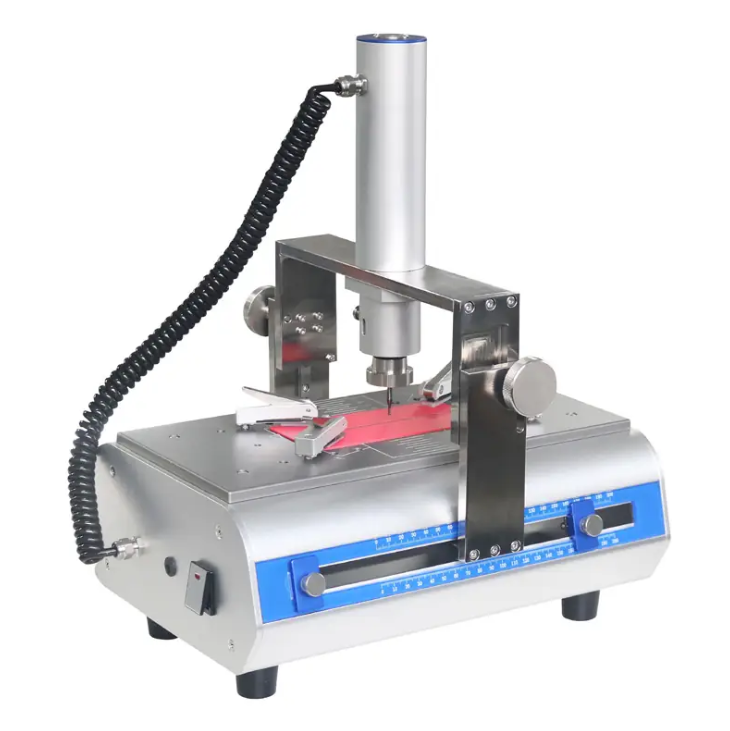
Our Electric Scribe Marks Machine for Corrosion Testing is designed to support more consistent scribe preparation before corrosion tests. It helps reduce variation caused by manual operation and provides a more practical approach for laboratories that need repeated coating evaluations.
After sample preparation, testing teams should record important details, including coating type, preparation method, exposure conditions, and evaluation results. Complete documentation helps users review test history and identify possible differences between samples.
Managing Records and Maintenance Procedures
Besides these records, collection-rate checks are also an important part of salt spray test management. By checking whether the collected spray volume meets the required range, laboratories can confirm whether the spray system is operating under suitable conditions. Regular monitoring of collection rate, solution concentration, and chamber temperature helps maintain more consistent exposure conditions during repeated tests.
Regular maintenance also affects testing stability. Equipment components should be checked according to usage requirements. Cleaning the chamber, reviewing spray systems, and maintaining proper operation conditions help laboratories keep testing procedures organized.
For professional users, salt spray testing equipment should support both testing performance and daily management needs. A suitable system allows operators to focus on accurate procedures while maintaining clear records throughout the testing process.
Selecting Equipment Based on Testing Applications
Different industries have different corrosion evaluation requirements. Coating manufacturers may focus on protective performance, while automotive suppliers may evaluate corrosion resistance of parts and surface treatments. Testing methods should match the material application and project requirements.
When choosing equipment, laboratories often consider chamber capacity, operating stability, maintenance requirements, and standard compatibility. These factors influence how efficiently teams can complete testing tasks and analyze results.
BIUGED INSTRUMENTS focuses on precision testing instruments for coatings, inks, and related materials. With our own R&D and manufacturing capabilities, we design and produce laboratory equipment for corrosion, weathering, and coating performance evaluation. Our production experience allows us to provide standard testing instruments as well as customized solutions for different laboratory requirements.
Our approach combines equipment design with practical testing experience. For OEM and customized projects, we communicate with partners about equipment configuration, functional requirements, testing standards, and workflow conditions. By understanding laboratory applications, we provide solutions that help users manage preparation, testing, and documentation steps in a more organized way.
Creating a Structured Approach to Corrosion Evaluation
Reliable corrosion analysis requires a balance between suitable equipment, controlled test conditions, and effective data management. By paying attention to solution preparation, spray collection checks, sample handling, and maintenance procedures, laboratories can improve the consistency of their testing activities.
For coating and material companies, a well-organized corrosion testing process provides clearer references for product improvement and quality decisions. With proper methods and suitable testing equipment, teams can better understand material performance and establish evaluation workflows that support long-term development.
