
Corrosion evaluation is an important part of material research, quality control, and product development. Different materials may react differently when exposed to salt, humidity, temperature changes, and other environmental conditions. A suitable testing plan needs to consider the application environment, evaluation purpose, and related standards.
For R&D teams, quality departments, and third-party laboratories, corrosion testing is not only about running a test. Sample preparation, test cycles, parameter control, and result comparison all influence the value of collected data. Understanding these factors helps users build more practical testing procedures.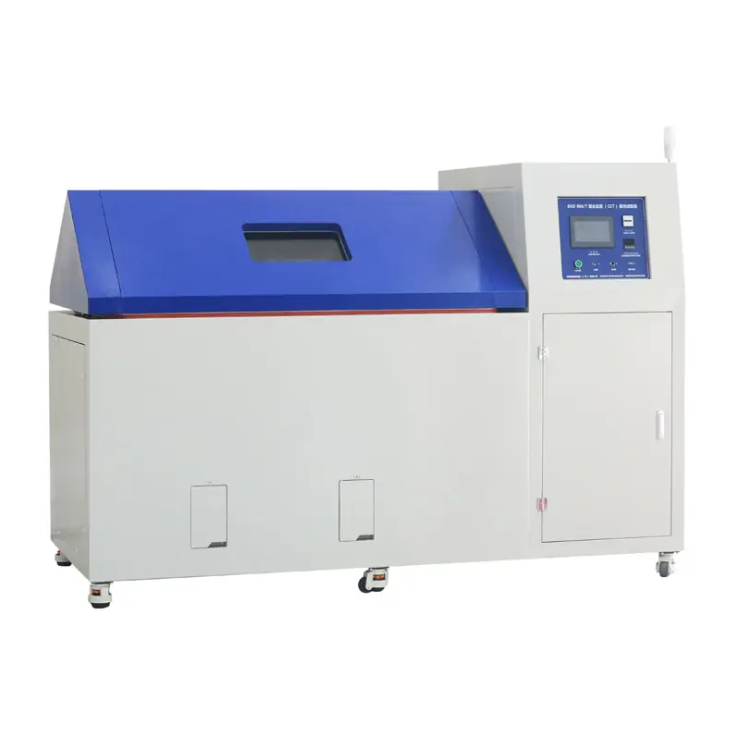
Understanding Common Corrosion Test Methods
Salt spray testing is commonly used to evaluate how materials and coatings respond to corrosive environments. However, different methods are designed for different research purposes. Laboratories usually select testing conditions according to material types, coating systems, and industry requirements.
Neutral salt spray testing (NSS) is widely applied for general corrosion evaluation. Acetic acid salt spray testing (AASS) and copper accelerated acetic acid salt spray testing (CASS) are also used for specific applications where accelerated corrosion conditions are required.
Cyclic corrosion testing provides another approach by combining several environmental conditions. Instead of using continuous salt exposure, cyclic methods can include salt spray, humidity, drying, and temperature changes to simulate more complex service environments.
When planning a test, laboratories should review the relationship between the material and the expected application. A coating used for automotive parts may require different evaluation methods compared with materials used in construction or industrial environments.
Matching Test Methods with Material Applications
Material selection affects corrosion testing decisions. Coatings, metals, plastics, and composite materials may have different durability evaluation requirements. Testing plans should focus on the actual working conditions of the product rather than using one method for every situation.
Automotive components, for example, may experience moisture, temperature changes, and road conditions during service. A cyclic corrosion approach can help researchers study how materials respond under repeated environmental changes.
For coating manufacturers, a salt spray test chamber can support comparative studies between formulations. By controlling exposure conditions, laboratories can observe surface changes, corrosion development, and coating protection performance during research and quality evaluation.
Third-party laboratories often need flexible testing capabilities because they serve customers from different industries. They may evaluate various samples based on project requirements, customer standards, and international test methods.
Considering Standards and Testing Procedures
Standards provide references for corrosion test setup and operation. ISO, ASTM, and other industry standards define requirements related to exposure conditions, equipment operation, and evaluation methods. Laboratories need to select the suitable standard according to the project purpose.
Before starting a corrosion test, users usually review sample preparation, mounting position, test duration, and environmental settings. These details influence how samples receive exposure and how results are recorded.
A professional testing process also includes proper documentation. Recording test conditions, sample information, and evaluation observations helps teams compare results across different studies and maintain organized quality records.
We focus on developing testing equipment that supports standardized laboratory procedures. BIUGED INSTRUMENTS provides material testing solutions for coatings, inks, and related industries, supported by our own R&D and manufacturing capabilities. Besides standard corrosion testing equipment, we also work with partners on customized solutions according to different application requirements. Through discussions on equipment configuration, testing functions, and laboratory workflows, we help customers create suitable corrosion evaluation systems for different industries.
Selecting Suitable Equipment for Laboratory Needs
Equipment selection depends on testing goals, sample capacity, and application requirements. Laboratories may consider factors such as control functions, environmental simulation ability, maintenance needs, and compatibility with required standards.
A suitable salt spray cabinet should match the testing workflow of the laboratory. Operators need to understand how the equipment controls temperature, spraying conditions, and exposure cycles before applying it to daily testing projects.
For users studying complex corrosion behavior, cyclic testing equipment can provide more testing options. It allows laboratories to combine different environmental stages and observe material changes under changing conditions.
Our Cyclic Corrosion Test Cabinets use a touch screen system to set and control various parameters. The equipment combines salt spray corrosion, humidity conditions, and drying processes to simulate cyclic corrosion tests. It can also perform neutral salt spray test (NSS), acetic acid salt spray test (AASS), copper accelerated acetic acid salt spray test (CASS), water spray, damp heat, drying, and standard atmospheric environment tests separately.
For laboratories with specific testing requirements, equipment configuration and functional settings can also be discussed according to project conditions, sample characteristics, and applicable standards.
Improving Corrosion Studies Through Practical Planning
A corrosion test plan should connect laboratory conditions with real application needs. Selecting a method, preparing samples correctly, and maintaining stable test parameters help researchers collect useful information during material studies.
For quality teams, repeatable testing procedures support product comparison and process improvement. For research departments, controlled testing environments provide references when developing new materials or improving existing formulations.
When choosing a salt spray test chamber, users should consider sample types, testing standards, and future application requirements. Equipment flexibility can help laboratories manage different projects while maintaining consistent operating procedures.
We also consider the importance of long-term laboratory operation. Proper equipment maintenance, technical support, and calibration management are parts of a complete testing process. These factors help users organize corrosion evaluation work more effectively.
Building Reliable Corrosion Evaluation Workflows
Corrosion testing involves more than selecting a testing method. It requires a connection between material characteristics, environmental conditions, standards, and laboratory management. A suitable approach allows teams to study visual changes, durability trends, and comparative performance with clearer references.
For professional laboratories, a salt spray cabinet can become part of a structured corrosion evaluation system. Combined with proper procedures and documentation, it supports testing activities across coating, automotive, and material industries.
At BIUGED INSTRUMENTS, we continue to develop testing solutions that support R&D, quality inspection, and third-party laboratory applications. By focusing on practical testing needs, we help users organize corrosion studies with controlled methods and reliable workflows.
