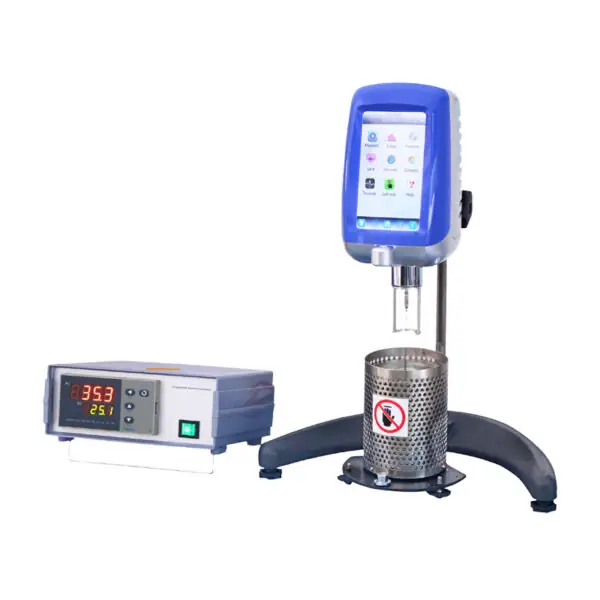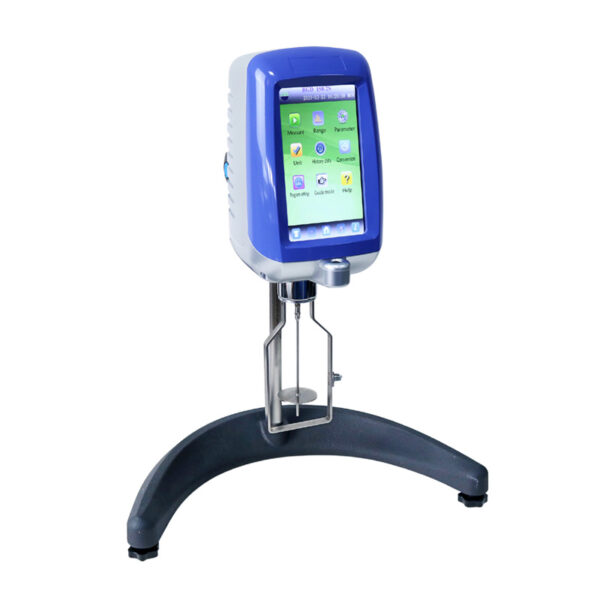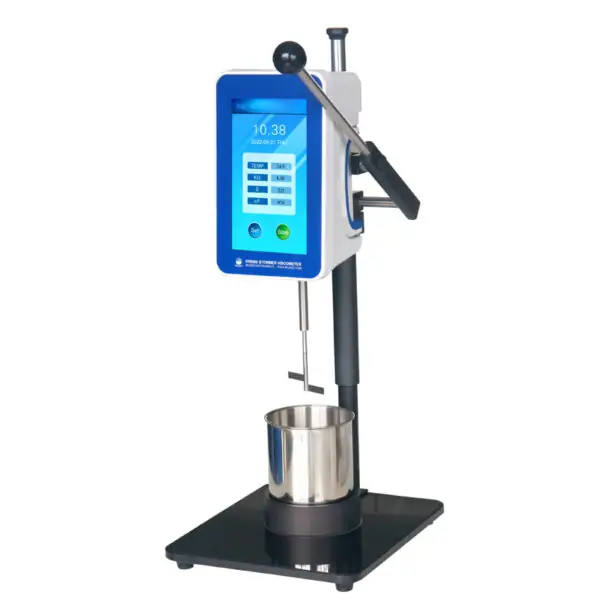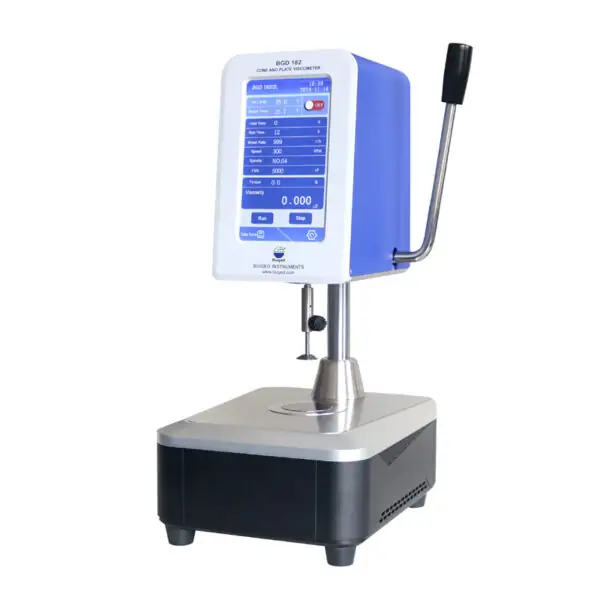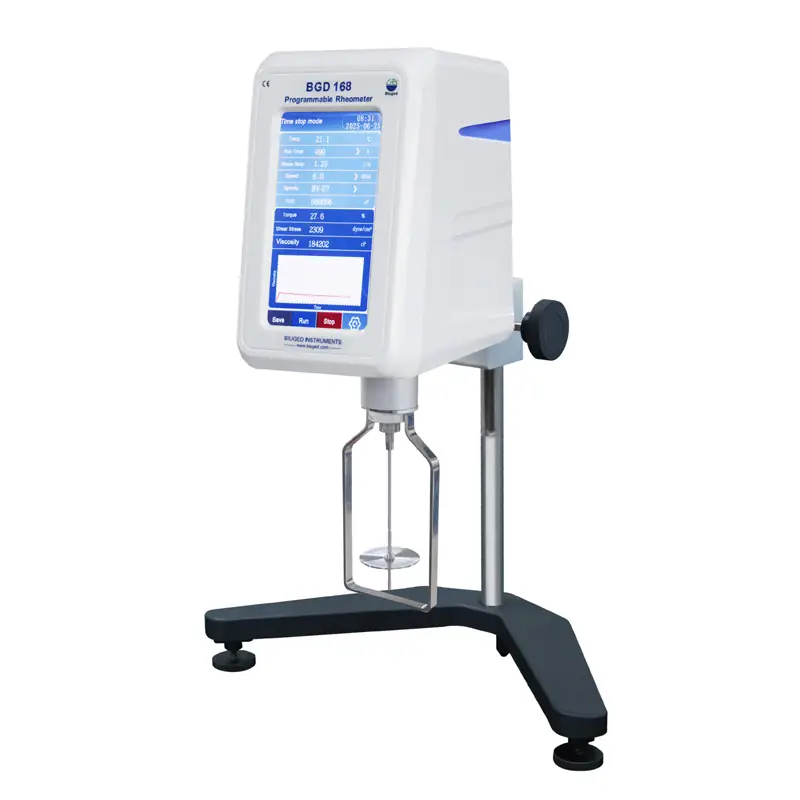
Rotational viscometers are typically used to measure the viscosity (also known as apparent viscosity) of Newtonian or non-Newtonian fluids at specific speeds and with specific spindles. However, in industries such as coatings, inks, adhesives, and other polymer materials, nearly all resins, emulsions, and finished products are non-Newtonian fluids. These materials exhibit different rheological behaviors under varying shear rates (dependent on rotational speed and spindle geometry).
To compare the rheological properties of different materials, a common industry practice is to evaluate their thixotropy or dilution index. This involves measuring the proportional change in viscosity when increasing or decreasing spindle speed to characterize shear-thinning behavior, or comparing viscosity values before and after high-shear conditions to assess thixotropic recovery.
BGD offers several rheometer models tailored to different material rheological properties. Test operators can customize testing programs (e.g., automatic shear rate adjustment) and leverage specialized software to comprehensively analyze material rheology, including simulations of real-world application scenarios.
Features
◆ Conforms ISO 1652,ISO 2555,ISO 3219,ASTM D2196,ASTM D2983 etc.
◆ 7-inch HD touchscreen:User-friendly interface with clear, detailed display.
◆ High-precision stepper motor drive:Stepless speed adjustment, accurate rotation, smooth operation, and noise-free performance. Unaffected by AC voltage fluctuations.
◆ Built-in electronic level:Real-time leveling status display for quick and easy adjustment.
◆ Magnetic spindle mounting:Reduces shaft wear during spindle changes, enhancing durability.
◆ Reinforced shaft design:Engineered for long-term reliability.
◆ Switching power adapter:Wide voltage input range with strong anti-interference capability.
◆ Real-time sampling technology allows for the observation of viscosity changes even at low speeds without the need for waiting.
◆ Programmable testing:Supports timed measurements, programmable speed/temperature ramping (requires optional temperature-controlled small-sample adapter).
◆ Real-time curve display :Visualize viscosity vs. time, viscosity vs. speed, and viscosity vs. temperature (with optional adapter) trends during testing.
◆ Multi-unit conversion:Dynamic and kinematic viscosity units interchangeable; automatic calculations.
◆ Factory-calibrated & user-recalibratable:Full-range linear calibration via computer; user-adjustable.
◆ Optional rheology software:PC-controlled operation and advanced data analysis for comparative rheological studies.
Main Technical Parameters
| Ordering Information → Parameters ↓ | BGD 168/L | BGD 168/M | BGD 168/H |
| Measurement Range (mPa.s) | 1-6 M | 50-40M | 400-320M |
| Rotate Speed(r/min) | 0.1-250 | ||
| Rotors | LV1、LV2、LV3、LV4 (LV0 for optional) | RV2、RV3、RV4、RV5、RV6、RV7 (RV1 for optional) | |
| Measurement Accuracy | ±1.0% (of the full range) | ||
| Repeatability | ±0.5% (of the full range) | ||
| Power Supply | Power Adapter (Input:110/220 V;50 /60 Hz; Output:12V;2A) | ||
| Optional Accessories | BGD 162/Z-004—UL Test Assembly(for BGD 168/L) BGD 168/Z-010—UL Test Assembly for Thermostat(for BGD 168/L) BGD 168/Z-003— Precise Thermostat for Viscosity Testing BGD 168/Z-004—Rheometer Control and Data Analysis Software BGD 168/Z-005— Gel Time Test Kit (10 glass spindles + 1 spindle holder) BGD 168/Z-011—Small Sample Test Assembly for Thermostat BGD 845/846— Low-high Temperature Circulating Bath | ||
(M=1 million)
BGD 168 Programmable Rheometer (Operation)
BGD 168 Programmable Rheometer (Introduction)

NO.15, Fuzhong Rd., Zhongxin Town,
Zengcheng District, Guangzhou.China