Weathering tests help laboratories compare how coatings and polymer materials respond to light, heat, and moisture. Exposure time alone cannot explain a result. Sample preparation, reference panels, the light source, and inspection methods all affect what the data can show.
When we plan a weathering programme, we first ask which exposure method fits the material and failure mode, and how changes will be reviewed. This comparison helps us select a test without treating one method as a universal replacement for another.
Let the Test Question Guide the Comparison
A coating formulator may compare recipes for colour or gloss retention. An automotive materials team may investigate fading or cracking in interior trim. A plastics laboratory may examine surface changes after UV and moisture exposure. These projects share a concern with durability, but they may need different exposure cycles and acceptance criteria.
We use reference panels to establish a baseline for comparison. Keep an unexposed sample where practical and expose a known control with the new material. Measure relevant properties before testing. Record the substrate, film thickness, curing, and preparation method so starting differences are not mistaken for weathering effects.
Xenon and UV Exposure Produce Different Evidence
Xenon arc systems use suitable filters to simulate aspects of daylight. They can support studies that require a broader daylight spectrum. Fluorescent UV methods focus on ultraviolet exposure and often combine it with condensation or other moisture cycles. Their spectral output differs from filtered xenon exposure, so results need careful interpretation.
We match the source to the test objective. Outdoor coatings may need checks for colour, gloss, and surface integrity under a selected daylight simulation. A polymer part with UV-related cracking may call for a method focused on UV and moisture effects. A UV test chamber fits work where the selected method calls for this type of exposure; xenon testing may suit broader daylight simulation.
Neither source automatically replaces the other. Results from separate methods should not be treated as directly equivalent unless a validated correlation supports that comparison. When a product has several likely failure modes, complementary tests can examine them separately instead of forcing one cycle to answer every question.
Compare the Changes Each Material Shows
When we review results, we account for differences in material response. A coating may lose gloss or change colour before cracking appears. Plastic parts may discolour, become brittle, or develop surface cracks. Automotive interior materials may need appearance and physical-property checks, depending on the component specification. Review findings against the sample’s intended use.
Reference panels also help reviewers distinguish material change from measurement variation. Use consistent lighting for visual checks, repeat measurements with the same instrument settings, and photograph samples from a fixed distance when images form part of the record. Colour alone may not describe a coating’s condition; gloss, adhesion, or another relevant property may also require evaluation.
Use Standards Without Overstating Their Meaning
ISO 16474-2 addresses xenon-arc exposure of paints and varnishes, while ISO 4892-2 covers plastics. We recommend confirming the applicable edition and method against the material and project requirements. Record the standard, filter, irradiance, temperature, moisture cycle, and inspection schedule so others can understand how the test was run.
For exposure with daylight filters, 0.51 W/(m²·nm) is a commonly used irradiance level under these standards. The methods also describe high-irradiance xenon equipment operating at three to four times this level. Higher irradiance may speed screening for certain materials, including some automotive interior materials, but suitability depends on material response and test purpose.
We do not treat accelerated exposure as a universal conversion from chamber hours to outdoor service years. Natural weather varies with sunlight, temperature, rain, pollutants, orientation, and season. Use accelerated results to compare samples under defined conditions. Service-life decisions may also require field data or a validated correlation.
Make Reference Checks Part of the Workflow
Before exposure, label each panel and log its preparation, baseline measurements, and reference status. Follow planned inspection intervals during testing, and note interruptions or setting changes. At each review point, compare exposed samples with the control and initial measurements. Consistent records help show when a change appears and whether repeat testing is needed.
When evaluating a weathering chamber, check whether its filters, irradiance control, temperature settings, moisture functions, and sample capacity match the method. Consider how the lab will measure samples before and after exposure. Equipment capability matters, but it cannot correct inconsistent preparation or missing records.
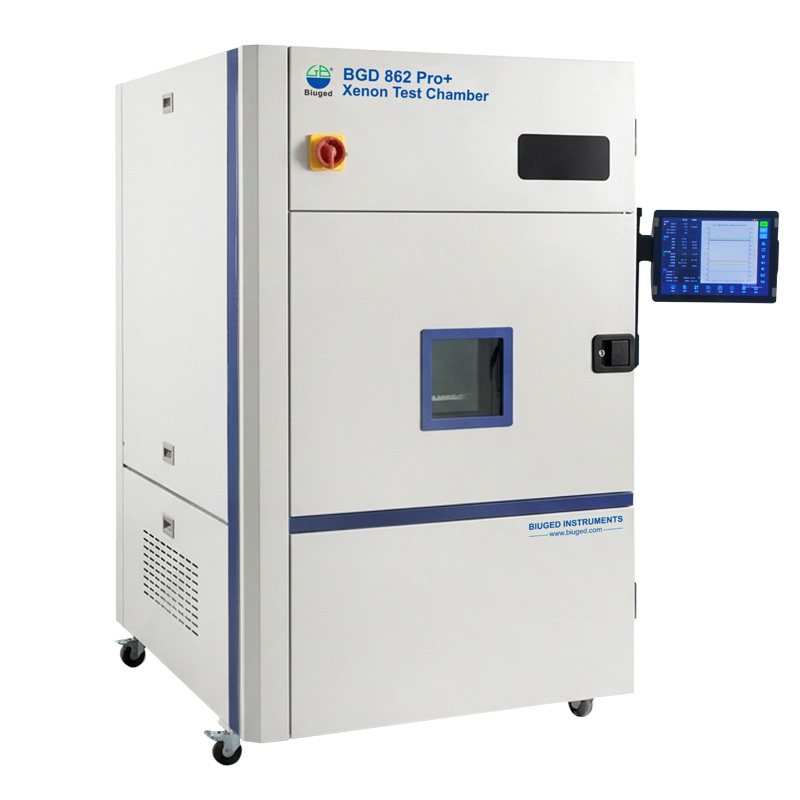
For projects where conventional exposure cycles slow development, our BIUGED INSTRUMENTS High-irradiance Xenon Test Chamber can be considered for high-irradiance evaluation. First confirm that the material and test method suit this approach. Compare the required operating conditions with the intended standard before selecting a configuration.
Keep the Findings Traceable
A useful report connects the exposure source with the sample, test purpose, and observed changes. Include sample identification, substrate, preparation, instrument and calibration details, exposure settings, inspection dates, and evaluation methods. Record deviations clearly rather than comparing programmes as if their conditions were identical.
We apply the same logic when evaluating a weathering chamber or a UV test chamber: define the material question, then select the exposure method and review process. BIUGED INSTRUMENTS provides testing instruments for coatings, inks, and related materials. Clear reference panels, suitable standards, and traceable records give laboratories a practical basis for interpreting results.